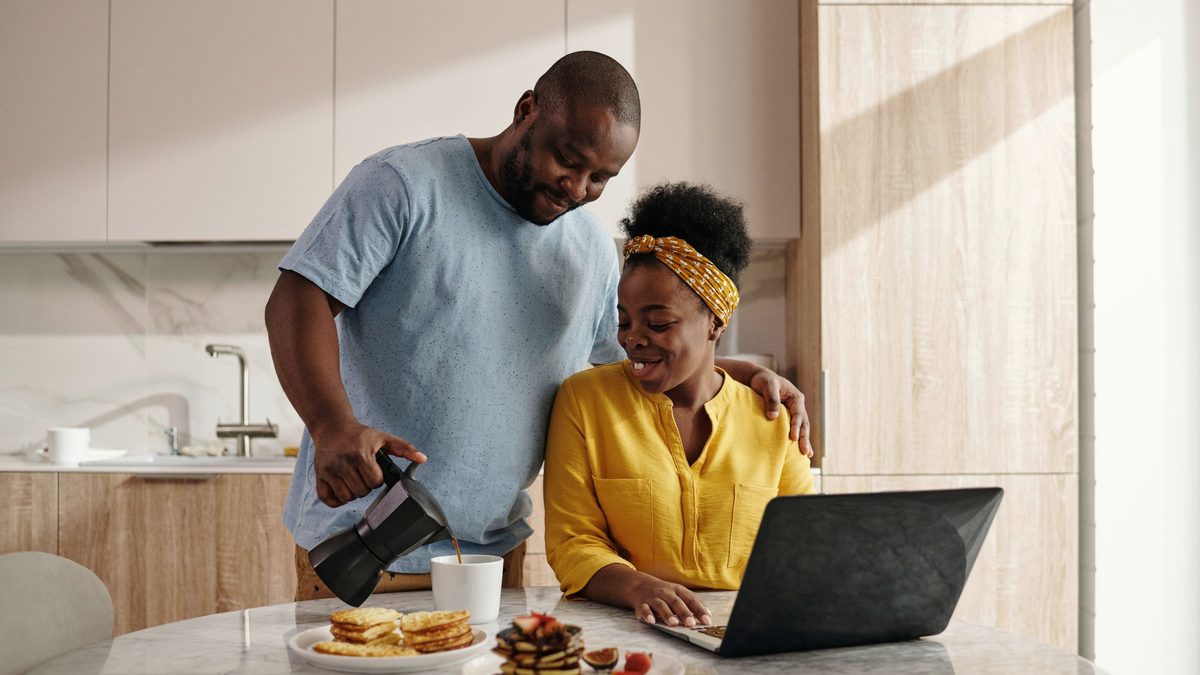
The coffee on the table, and nobody says a word
Every morning, your coffee is waiting on the table. Every evening, someone has remembered to take out the bins, buy bread, reply to the babysitter or email the landlord. At first, you said thank you. Then it became normal. And what's normal, we stop seeing.
It happens to every couple. Those who moved in together six months ago, and those with three kids and fifteen years behind them. You don't become ungrateful. You just get used to it.
The trouble is how it feels for the one doing these things, day after day, without anyone noticing. Often they say nothing. But a small thought settles in: "If I stopped, would anyone even notice?" Feeling invisible wears a relationship down much more than people think.
The good news is that the opposite is just as true. Noticing, and saying so, does real good. And researchers have measured how much.
A thank-you today, a closer couple tomorrow
Psychologist Sara Algoe and her colleagues Shelly Gable and Natalya Maisel followed around sixty couples who lived together. For two weeks, every evening, each partner filled in a short questionnaire: what the other had done for them, how they felt, how they saw their relationship that day.
What they found is simple. On days when one person felt grateful to their partner, the couple was doing better the next day. And not just for that person: both felt closer and more satisfied with their relationship. The researchers compared gratitude to a booster shot for relationships: a small gesture that, repeated, keeps the bond strong day after day.
This isn't only for couples in trouble. The couples in the study were mostly doing well. Even when things are good, gratitude keeps working, like the regular upkeep of a home you love.
Thank you doesn't mean "I owe you"
The same study made an important distinction. Feeling grateful and feeling indebted are not the same thing.
Feeling indebted is thinking: "He did the shopping, so I have to do the dishes." You keep score. You pay back to be even. That sense of owing didn't have the same effect: it didn't bring couples closer the way gratitude did.
Feeling grateful is different. It's thinking: "She thought of me. She saw I was exhausted and took over." You don't just see the favour. You see the care behind it, and the person who showed it.
That's why a thank-you doesn't need to be paid back. If you thank your partner so they'll thank you in return, or to score a point, it rings false, and they can tell. A real thank-you asks for nothing. It just says: "I see you."
Feeling appreciated makes you want to care
At the University of California, Berkeley, Amie Gordon and her colleagues, including Emily Impett and Dacher Keltner, looked at what gratitude does over time. They followed couples with questionnaires, watched them talk together in the lab, and got back in touch several months later.
What they saw looks like a virtuous circle. People who felt appreciated by their partner became more appreciative themselves. And the most appreciative were also more attentive to their partner's needs, more committed to the relationship, and more likely to still be together at the end of the study. Even outside observers, who didn't know the couples, could see the difference: grateful partners came across as better listeners.
Another researcher, Nathaniel Lambert of Florida State University, added a useful detail: feeling grateful is good, but saying it matters too. In his studies, people who expressed their gratitude to their partner came to see their relationship as stronger and more caring. A thank-you does good to the person who hears it, and to the person who says it.
 Duoly, the couples appThe evening date that puts the conversation back at the center.
How to say thank you so it counts
No need for big speeches or presents. A few simple habits are enough.
- Be specific. "Thanks for everything" slides by without a trace. "Thanks for calling my mum when I didn't have the energy" lands. Say what your partner did, and what it meant to you.
- Say thanks for the ordinary. That's where most of the invisible work hides: the laundry, the appointments, filling up the car, the charger left by your side of the bed. "I never say it, but it really helps that you handle the paperwork."
- Notice the person, not just the task. "You saw I was stressed before my interview and you made me laugh all evening. You always know what to do." You're not thanking a service, you're thanking someone.
- Say it, don't just think it. A text during the day is enough: "Was thinking about this morning. Thanks for sorting breakfast while I hunted for my keys."
- Accept their thanks. When you're thanked, skip the "oh, it was nothing". Try instead: "I'm glad you noticed." Letting the thank-you land encourages your partner to do it again.
It works long-distance too, and in every kind of couple: the one who organised the weekend with friends, the one who got through the sleepless nights with the baby, the partner who listened for an hour on the phone to the story of a rotten day.
What if you're the one who never gets thanked?
Maybe you're reading this thinking mostly: "Nobody ever says thank you to me." It's a very common feeling, and it deserves to be taken seriously.
Often the most effective thing is to start by giving what you'd like to receive. Not to make a point, but because thanks tends to spread: when we feel appreciated, we appreciate more in return. That's the circle the Berkeley researchers observed.
And if that's not enough, you can say it simply, without blame: "I feel like what I do around the house goes a bit unnoticed. It would mean a lot if you noticed it now and then." That's not asking for praise. It's stating a need, which is the best way to give it a chance of being heard.
Gratitude doesn't fix everything. It doesn't replace a fairer split of chores when things are unbalanced, or a real conversation when something's wrong. But it creates the ground where those conversations go better. Tonight, pick one thing your partner does that you no longer think about. And thank them for it, specifically. It's small. That's exactly why it works.