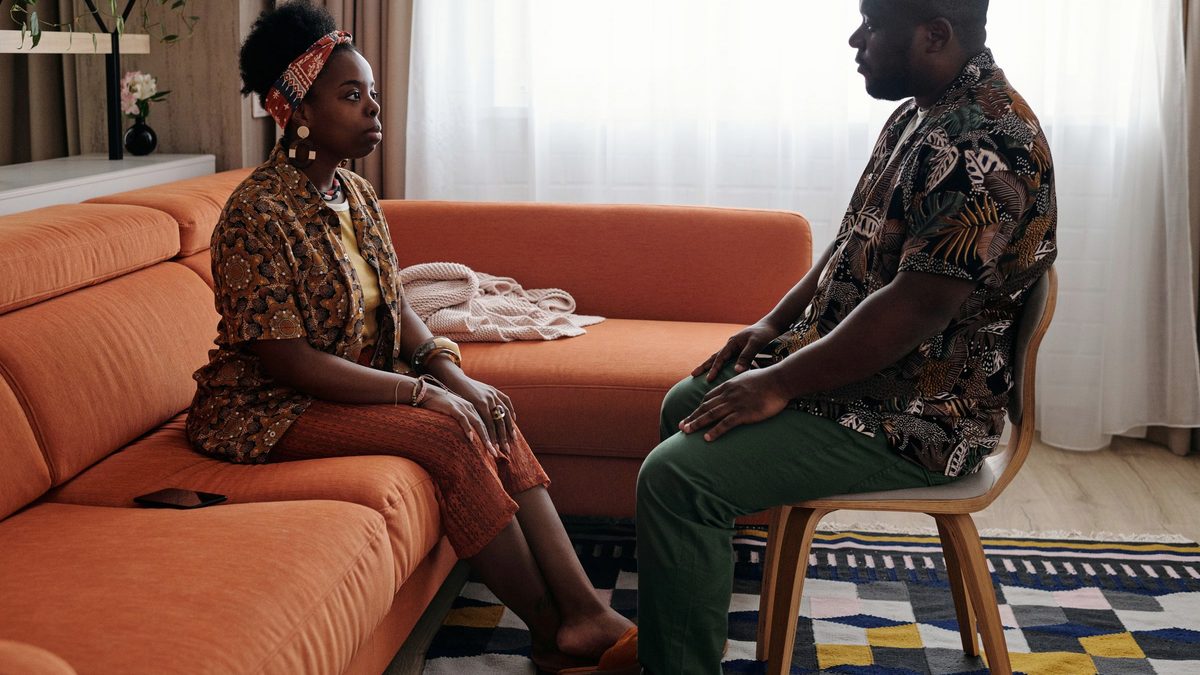
The question that comes up at every friend's wedding
One Sunday, at a friend's place, someone announces a pregnancy. Everyone cheers. On the drive home, the silence lasts a little too long. Then one of you says: "Do you ever think about it?" And the other keeps their eyes on the road.
For some couples, the question of children settles itself without discussion: both want them, or neither does. For others, it becomes the topic you avoid, the one that resurfaces at every birthday, every new baby in your circle, every "so, when's it your turn?" from an aunt.
If that's you, you're not selfish and you're not "bad at relationships". You're facing one of the hardest disagreements there is. And it deserves to be handled with care.
Why this disagreement is different
Most disagreements in a couple can be negotiated. You don't want the same holiday? Take turns. One wants the city, the other the countryside? Look for a small town. With a child, that's impossible: you either have one or you don't.
American psychologist John Gottman, who has observed thousands of couples, showed that many disagreements never really get solved. He calls them "perpetual" problems: they come from deep differences in personality or values. Happy couples don't make them disappear. They learn to talk about them without hurting each other. But when a disagreement touches a life dream, it easily gets stuck: every conversation goes round in circles, and each person feels threatened in who they are.
Gottman also noticed that behind a stuck position there's almost always a dream, a fear or a personal story. Behind "I want a child" there may be a wish to pass something on, a warm family you'd like to recreate, or a fear of regret. Behind "I don't want one" there may be memories of a hard childhood, a love of freedom, a fear of not being good enough, or simply no desire for it, which is just as valid an answer.
"No", "not now" or "I'm scared": three different things
Before deciding you're stuck, you need to know which "no" you're dealing with. There are several.
- The firm "no": this person has never wanted children, has thought it through, and the answer doesn't change over the years.
- The "not now": too young, not enough money, an unstable job, a flat that's too small. Here the problem is the timing, not the child.
- The "I'm scared": fear of losing the relationship, of not knowing how, of repeating what you went through. Often the person isn't sure what they want themselves.
The same goes for the other side: a "yes" can be a deep, long-held wish, or a desire that mostly comes from pressure around you.
These positions can move. Two researchers, Maria Iacovou and Lara Patrício Tavares, studied the childbearing plans of thousands of people in Britain over many years. They found that many changed their minds, upward as well as downward. The reasons: what you learn watching friends become parents, a new partner, pressure from the people around you, and the wish to move closer to what your partner wants. When the two partners disagreed, each tended to take a step toward the other over time.
Careful: this doesn't mean "just wait, they'll come round". It means: don't lock in your partner's position too quickly, or your own.
The trap of giving in to keep the peace
When a topic hurts too much, it's tempting to give in. "Fine, let's do it." Or the opposite: "Forget it, I'll let it go." In the moment, it's a relief. In the long run, it's risky.
In 2005, psychologist Emily Impett and her colleagues Letitia Anne Peplau and Shelly Gable followed couples for two weeks, asking them every day whether they'd made a sacrifice for their partner, and why. Sacrifices made to please the other person, out of a wish to make them happy, tended to do good. Those made mainly to avoid a conflict or a disappointment went with more negative emotions, less satisfaction and, a few weeks later, more breakups. These couples were young and their sacrifices smaller than a decision about a child. But the lesson matters even more for a choice that shapes a whole life.
A child had "for the other person" without wanting it yourself, or a wish for a child buried without ever really talking about it: these are decisions that can leave lasting resentment. So the real question isn't "who's going to give in?" but "what can each of us accept wholeheartedly, without betraying ourselves?".
Population researchers have noticed this too. In Italy, Maria Rita Testa and her colleagues followed couples whose plans differed. It didn't matter whether it was the man or the woman who wanted a child: the disagreement weighed on what happened next in the same way. When the disagreement lasted, the outcome often landed in between: fewer births than when both wanted a child, more than when neither did. A kind of in-between that nobody had really chosen.
 Duoly, the couples appThe evening date that puts the conversation back at the center.
How to talk about it, in practice
This isn't a five-minute conversation in passing. Nor is it a single conversation. A few pointers:
- Pick your moment. Not right after a friend's baby news, not in the middle of a row. Suggest it ahead of time: "I'd like us to talk about kids, calmly. Does this weekend work for you?"
- Talk about yourself, not the other person. "When I picture my life in twenty years, I see a big family table" works better than "you're selfish". "I'm scared of losing what we have" works better than "it's all you think about".
- Look for the story behind the position. Ask: "What does having a child mean to you?" or "What scares you about it?". Then listen without preparing your reply.
- Tell "never" apart from "not now". Ask honestly: "Is this a no forever, or could something change your mind? What, for example?"
- Put the facts on the table. Age, health, money, work. Time constraints are real, especially when fertility is involved. Not talking about them won't make them go away.
- Give yourselves a timeline. Not an ultimatum, a check-in. "Let's talk again in six months, and in the meantime we each think it over." Waiting with no end in sight wears everyone down.
If the conversation always turns into a fight, a couples therapist can really help. Their job isn't to decide for you, but to make sure each of you can speak without being judged.
And if you truly can't meet in the middle?
Sometimes, after taking time, talking a lot, maybe seeing someone, both positions stay the same. It's painful. But it's nobody's fault. Two people can love each other sincerely and not want the same life.
Some couples find a way: one discovers they can live fully without children, by being there for nieces, nephews, godchildren, or through work that involves passing things on. The other discovers a wish they hadn't dared admit. Others choose to separate, not for lack of love, but so as not to deprive one of them of something essential. None of these outcomes is a failure, if it was chosen honestly, together.
What you can do tonight is simply open the door. Not to decide. To say: "I'd like to understand what you really feel, and tell you what I feel." It's often the first time you talk about it without being on the defensive. And whatever comes next, that's a real step toward each other.